By
Megan Darwin
Perfect health, vitality, and immortality have been human aspirations since the beginning of civilization. Ancient peoples from all corners of the globe have developed distinct systems for health and healing in an effort to prolong life and maximize wellness. Even today, in our modern American society, scientists and doctors work non-stop researching the human body, searching for ways to diminish suffering and disease. Universally, we all want to live as full and comfortable a life as possible. The trouble is, despite the leaps and bounds that have been made in modern medical research, disease and suffering are still prevalent, and appear to be increasing on a scale inconsistent with our advanced knowledge and medical developments. How can this be? The simple answer to this conundrum lies in the very core of our modern mind. The scientific approach to health lacks the fundamentals of overall well-being, which cannot be achieved with out its three primary roots: body, mind AND Spirit. Without harmony flowing in and between these essential elements of an individual, perfect health is simply not possible. This is precisely why the ancient healing system of Ayurveda has endured the 5,000 plus years of its existence. Within this sacred science there exists a detailed process for complete detoxification and rejuvenation for body, mind and Spirit, opening the door for anyone and everyone to manifest their maximum potential. This process is called Pancha Karma.
Pancha Karma can be broken down into its Sanskrit meaning of “Five Actions.” These five actions refer to the five basic therapies that are utilized during this healing process. The beauty of Ayurveda and Pancha Karma lies within the focus on the individual doshic balance of each individual. According to Sushruta, “The function of pancha karma is to preserve the equilibrium of the doshas, promote lessening of the doshas, pacify aggravated doshas, and eliminate advanced doshas.” (Tiwari, p. 267) Pancha karma can be customized to the needs of any particular individual, however due to its purifying and temporarily depleting nature, there are a few contraindications. These include, but are not limited to, a person who is extremely old or weak, the very young, pregnancy, emaciation, extreme obesity, and severe mental instability. (Tiwari, p. 273) Otherwise, it is extremely safe and beneficial for most individuals. This is due to the flexibility that is inherent to the practice of pancha karma. An approach of reduction (langhana) can be taken in a case of excess dhatu. Alternately, a more gentle approach of palliation can be applied for a patient who needs balancing on a more subtle level. This illuminates the crucial factor of individualized care that makes Ayurvedic health care so universally effective.
There are three phases to prepare and carry the patient through the pancha karma experience. The first phase is known as Purva Karma (“Before Actions”). The goals of pancha karma (elimination of toxins or “ama” and doshic balance) can only be successfully achieved if the body is properly prepared to receive treatment. Generally, an individual is instructed to take at least 7 days to prepare the body and mind for pancha karma. During this period of time the patient must focus primarily on two main preparatory processes: oleation (both internal and external) and diaphoretic sweating. Internal oleation is achieved through the intake of ghee, which can be medicinally infused with herbs if necessary. Oleation is necessary for 5 main reasons: 1) Encouraging the dhatus to release ama 2) Increasing the secretions that enable the dhatus to carry ama to the G.I. track for elimination 3) Lubrication of the dhatus to protect from damage while ama is being removed 4) Pacification of Vata 5) Removal of obstructions in the channels. (Joshi, p. 181-182) The standard dosage for most people requires one teaspoon of ghee taken on the first morning, and a subsequent increase by one teaspoon per day for each following day. For those who are put off by taking their ghee straight, the ghee may be melted in a dipana tea, such as ginger. The efficient digestion of the ghee is crucial during this time, as ghee is an animal fat and can stick to the tissues if not absorbed properly, so it is often advised to take an additional herbal dipana to increase digestive capability within a half hour after taking the ghee. This also reduces any possible nausea that may occur. Other oils may be used if necessary, but according to the Caraka, “ghee is the unctuous substance par-excellence. This is because, over and above the excellence in its unctuous qualities, ghee has a remarkable property to assimilate the properties of other substances when added to it.” (Caraka Samhita, p. 247) External oleation is achieved through daily application and massage of dosha specific oils onto the body. Through external oleation, the skin (the largest organ of the body) absorbs the nutritious oil. It is drawn deep into the layers of the skin, where it can aid in lubrication of dhatus and release of ama. External oleation also has an additional effect of being very calming to the nervous system, and protecting the individual from external vibrations and energies that are best kept at bay. It can be thought of as a sheath from the outside world, a barrier to guard oneself from external stress. The combined efforts of internal and external oleation help the body to absorb unctuous oils from the inside out and the outside in.
Swedena, or therapeutic heat, is the second player in Purva Karma. The part it plays is crucial to the efficacy of purva karma and toxic release. Although the meaning of Swedena implies sweating, it is the dilation of the channels that is truly necessary to complete the objective of oleation. The heavy and sticky nature of ama is countered through heat and mobility. Swedena also helps to activate and mobilize the doshas so that they can swiftly transport the released ama from the tissues to the gastrointestinal tract where they can be eliminated. (Joshi, p. 189-190) It also aids in pacifying Vata and Kapha, reducing stiffness and cold in the body. Similar to the utilization of swedena for disease treatment, “if the season is very cold and if the body of the patient is very strong, strong fomentation is prescribed. If the disease is mild, the season is moderately cold and the body is weak, mild fomentation is prescribed. If all are of moderate nature, then moderate fomentation is prescribed.” (Caraka Samhita, p. 269) A practical method for inducing dilation and sweating is through the use of a steam bath, but even a hot shower in an enclosed space can prove effective for those without access to such specialized methods. It is important during the purva karma phase (particularly Swedena) to maintain hydration through intake of water.
While preparing the body for the main pancha karma therapies, the patient is advised to also reduce the amount of external stimuli on the mind and body. This way the system can focus on removing toxins and repairing damaged tissues and organs. One should generally avoid the daily stress of work and family, keeping the mind free to relax and open. Also, sexual activity should be restricted. Emotionally taxing situations should be avoided, and rest should be increased. Even speech should be kept to a minimum if possible. Stimulation from the media (i.e. television, music, bright lights) should be kept at bay as well. Meditation and quiet contact with nature can benefit a person significantly during this time. The Caraka specifically states that “while under the oleation therapy, one should use hot water, observe bramacarya, one should not sleep during day time, one should avoid physical exercise, loud speech, anger, anxiety, cold and sun, and one should lie down or sit in a place well protected from the wind.” (Caraka Samhita, p. 260)
It is also very important to keep a moderate diet while preparing for pancha karma. The Ayurvedic wholefood kitcheree is wonderful to incorporate, in addition to warm, light foods such as steamed veggies and rice. Any foods that are heavy and difficult to digest are advised against such as sweets, fried foods, and meat and dairy products. Salty, pungent and sour foods should be avoided, as well as fermented foods. Stimulants like alcohol and caffeine should not be taken, and both cold food and drinks which hinder the digestion process. As pancha karma is contraindicated during menses, women should plan their process accordingly. It should be noted that purva karma can take up to a month to complete. For persons with a kapha nature, this can be the case. Usually vata individuals require the shortest amount of time, and pitas are somewhere in the middle (2 weeks or so). (Halpern, p. 484) It is evident that a person is ready to receive pancha karma when the “skin is moist, stool is soft, tongue is coated, and there is little or no stiffness or heaviness in the body.” (Halpern, p.484)
Once proper preparation has been achieved, the 5 actions/therapies of the primary pancha karma process can commence. This middle phase is called pradhan karma, and it is where the focused intent of clearing and eliminating ama occurs. As Ayurvedic physician Sunil Joshi points out, “the body normally uses three routes to eliminate waste products and toxins: the mouth, anus, and pores of the skin. The three doshas act as the vehicle which carries ama either upward, downward, or out through the periphery.” (Joshi, p. 203) The ama which has been loosened through oleation and swedena during purva karma can be accessed by the doshas and carried to the G.I. tract where it can then be eliminated through any of the three main outlets. This leads us to the classic 5 actions of pancha karma.
The first action that encourages the elimination of toxins upward is known as Vamana. Vamana utilizes the upward doshic movement, udana, and eliminates through the mouth. Vamana accesses excess kapha that is located in the upper stomach cavity, and it can essentially be described as induced vomiting. As unpleasant as most people find vomiting to be, the process of Vamana is usually free of discomfort or even nausea. As with all pancha karma therapies, it should be administered under the care and supervision of a certified Ayurvedic practitioner. Different practitioners have slightly differing methods for administering Vamana, but there exists a singular theme and goal to the procedure. The patient is given a kapha aggravating meal the night before Vamana. Right before bed, an herb intended to heat, thin out and lift the contents of the stomach is given to the patient. The following morning, after normal elimination and light oleation and swedena, the patient is given about 1 ½ cups of thin porridge followed by an emetic herbal tea. Licorice tea is very common and effective for inducing vomiting. As much as one gallon of liquid can be consumed, in an effort to fill the stomach completely. Soon the patient will feel the urge to vomit, and vomiting will begin and bouts will last for approximately 30-40 minutes, and then the effects of the stimulants will subside. Sunil Joshi states that, “The patient should vomit until there is a bitter, sour or burning taste in the mouth. This indicates that the stomach is empty and the contents of the small intestine are now being discharged.” After the therapy is complete, the patient is encouraged to rest and should only consume rice water after 4 or 5 hours of allowing the body to rest. The patient will be left feeling light, aware, with improved digestion.
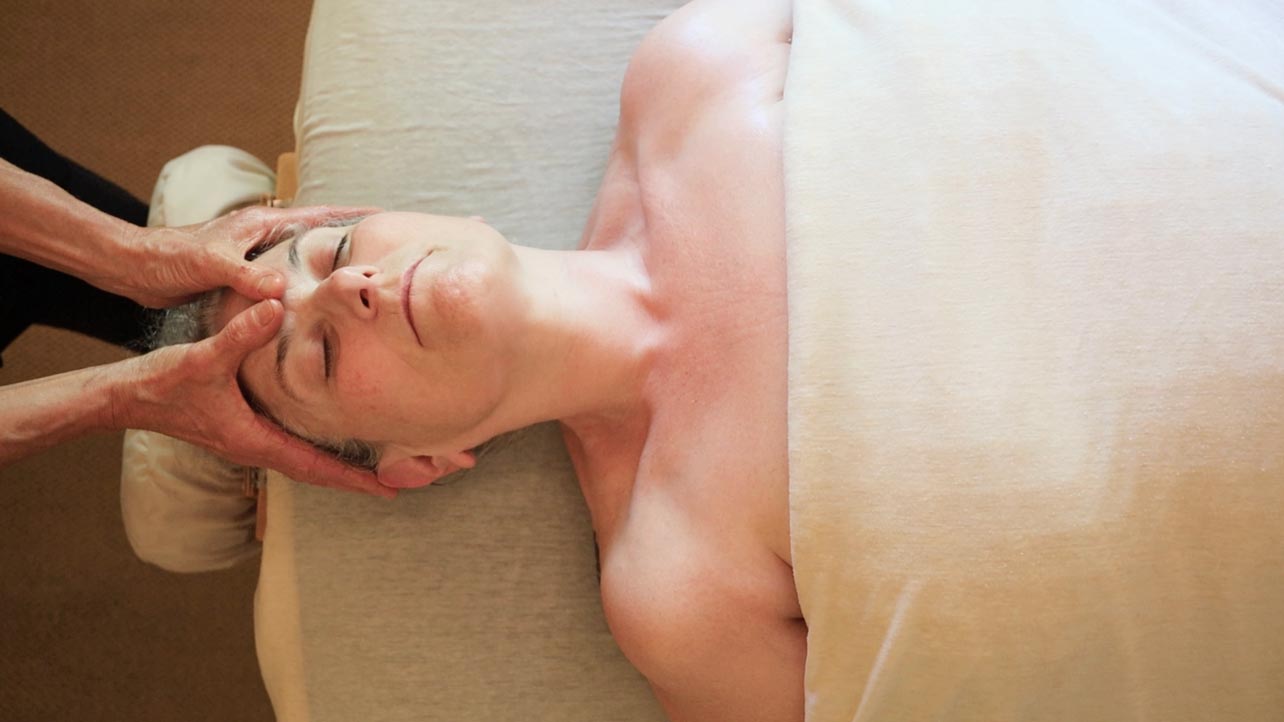
The second procedure utilized in pancha karma is called Nasya. This therapy relieves all three doshas from the neck upward. Its purpose is to cleanse, lubricate, and nourish the nasal passages and sinuses. Most problems related to the sinuses and head can be significantly alleviated through Nasya therapy, such as sinus congestion, colds, allergies, migraine, epilepsy, and even degenerative diseases of the brain like mental retardation and memory loss (Joshi, p. 212). There are several ways to administer Nasya. Herbal juices and extracts, powders, and medicated oils can all be delivered into the nasal passages. A common Nasya treatment uses 4-8 drops of herbalized sesame oil. In preparation for the administration of oil into the nasal passages, the patient is given a face massage with warm oil, stimulating heat into the sinus areas. Fomentation is also incorporated, opening and dilating the passageways in the head. After this is complete, the head is reclined and the oil is dropped into the nostrils, and the patient is instructed to inhale deeply and quickly to encourage the oil upwards into the sinus passages. Soon, the ama will become loosened and dislodged and will flow into the throat or nose. When this occurs, the patient expectorates or blows his nose. Following treatment, the patient should rest and refrain from any stress inducing activities.
Removal of ama and cleansing of the small intestine, liver and gallbladder is achieved through the third therapy of Virechana. This is a purgation treatment and works using the downward movement of Apana vayu to clear excess pitta from the body. Virechana is indicated for all pitta-related disorders including hyperacidity, colitis, eczema and acne. The patient is given a purgative (castor oil, or a combination of dry herbs) in the evening before bed. Depending on the method used, the patient will experience an urge for a bowel movement approximately 4-8 hours after ingesting the purgative. This should last for a relatively short period of time, during which he/she will have 4-8 bowel movements. It is common for the stool to be loose and liquidy. This indicates that pitta dosha has been accessed and is being passed. As this therapy is dehydrating in nature, it is very important to provide the patient with plenty of liquids. Electrolytes are also very beneficial. Digestion may be temporarily agitated or reduced, and so light, easy to digest foods and liquids should be introduced slowly after therapy. The patient should rest for the remainder of the day, and should not undergo any additional therapies. The only contraindications for virechana are pregnancy, menstruation and the very weak.
The colon is addressed through utilization of the next therapy called Basti. Basti is considered perhaps the most important of all of the pancha karma therapies. It is unanimously held by Charaka and many other Ayurvedic scholars that, “while vamana, nasya and virechana together contribute fifty-percent of the benefits of pancha karma, basti by itself, provides the other fifty-percent.” (Joshi, p. 225) Professor R.H. Singh agrees, stating “as a matter of fact, Basti is the most important item among the Samsodhana procedures.” (Singh, p. 120) Basti is mainly performed to remove excess vata and ama from the large intestine, but since the colon is directly linked with all other organs and tissues, it affects all doshas and all dhatus. Essentially, basti is the introduction of medicated liquids into the colon through the rectum. There are two types of basti – a nourishing oil-based formula called Annuvasana, and a cleansing water-based basti called Niruha. These two bastis are administered alternately, beginning and ending with Annuvasana. The liquids should be in the range of 99-100 degrees Farenheight, and it is best if the patient can hold the basti for at least 20-30 minutes, and longer if possible. Administration is generally via a catheter which is inserted into the rectum while the patient is lying on his/her left side. Using a syringe or enema bucket, the liquids are gently pushed, or pulled through gravitational force, into the colon where they can be absorbed. Administration should only take one or two minutes, and when complete, the tube is removed and the patient should continue to lie on his/her left side for an additional ten minutes. It is then a good idea to have the patient lie on his/her back for another ten minutes and then on his/her right side for another ten. This encourages the oil to flow up and over in the direction of the descending colon, maximizing its influence. Bastis can be administered for up to 8 days, and the balance between Niruha and Annuvasana is contingent upon the nature of the imbalance of the client. Both are specific for vata dosha, however, a tonifying or purifying effect results from each individually. Annuvasana is contraindicated when there is excessive ama or kapha, while niruha is contraindicated when a patient is weak. (Halpern, p. 496).
Another type of basti can be administered to women, vaginally, and this is a type of vaginal douching called Uttara basti. Medicated oils or a water decoction can be used to treat disorders such as Candida and vaginitis. This therapy is generally not administered in the West, due to its sensitive nature.
The last karma that is a part of the pancha karma process is that of Raktamokshana, or therapeutic withdrawal of blood. This therapy addresses the rakta dhatu (the blood) and specifically pitta dosha. Toxins are circulated through the body via the blood vessels, and raktamokshana is a highly effective way to quickly purify the blood and remove toxic material from the body. It is a therapy that is particularly restricted in western culture, but this is mainly due to a lack of information, and often, disinformation regarding the procedure. By using leeches or a punctured vein, blood is released from the body, and with it, the toxins that are creating disease. The body is then stimulated to produce new, healthy blood, restoring balance. Certain conditions of pitta dosha like eczema, rashes, chronic itching, enlarged spleen and leukoderma can be alleviated through raktamokshana. Following the procedure, the patient should rest for about an hour, and can then get up and function normally.
The benefits of pancha karma are immeasurable. It is recommended to undergo the process at least once a year to maintain health and keep the doshic dance harmonious. The Charaka quotes, “By the administration of these therapies the vitiated doshas are eliminated from the body, the power of digestion and metabolism restored, mind, intelligence, sense faculties become clear, he gains strength and virility and he is not affected by old age and lives long without any disease.” (Halpern, p. 492) Spring is the best season to undergo pancha karma because of the mild climate and shift in seasons. However, under the right set of circumstances and guidance, pancha karma can be successfully experienced during any season (relative to the nature of the patient and the imbalances, of course). Also, if one follows Vedic Astrology, there can be optimal periods of time to begin therapy relating to the position of the moon. (Halpern, p. 485)
The process of pancha karma can continue for lengths of time of up to two or three months. It is very important to note that there is not one specific length of time or combination of therapies for every individual. Each journey through pancha karma is specific to the patient, customized for his/her condition and current state of health and balance. Similarly, an individual may experience several or many pancha karmas in a lifetime, and each may be different from that last.
When the Ayurvedic practitioner feels that it is time to complete the main pancha karma process, the patient will then enter into the third phase of Praschat Karma. This is the final phase of pancha karma, and its focus is on rejuvenating the body. It is especially important if a reducing pancha karma has been experienced. A patient may be feeling rather depleted or weak, and it is essential to rebuild strength, and re-invigorate the digestive fires so that proper metabolism can be restored. The importance of this phase cannot be overemphasized, since if digestion is not normalized, ama will continue to develop, and immunity from future disease will decrease. A person might actually be in worse condition and end up more dis-eased if pancha karma was administered without proper rejuvenation, than if pancha karma was never experienced at all. Most importantly, the digestive fires must be rekindled. This is achieved through the slow integration of light and easy to digest foods, such as broths, thin gruel, light cooked veggies, and mung dal. Spices intended to increase digestive power should also be incorporated into the diet according to the constitution of the client. Close monitoring of the client after a pancha karma experience is necessary to track the appetite and amount of gas that is present. If appetite is strong and gas isn’t observed, digestion is in good condition and the client can continue to increase his diet. If not, the client must continue with the light diet, until digestion is strong.
Rasayana therapy (tonification) refers to the process of slow integration of foods and management of digestion, but it also places a strong emphasis on the rejuvenation of the mind. Rasayana means, “that which promotes longevity by preventing aging and by making the body young again.” (Halpern, p. 500). Rasayana therapy builds ojas while working specifically with the rakta dhatu (the blood). A patient who has just finished pancha karma will likely feel a little weak, both physically and perhaps emotionally/psychologically. While rekindling digestion, a post-pancha karma patient should definitely be encouraged to rest. Similar to purva karma, patients are advised to keep any stress inducing activities to a minimum. This includes, but is not limited to, work, family, exercise, romantic relations and travel. The system can easily go into overload after experiencing so much down time, and so it is not advised to jump back into one’s busy schedule right away. There are also particular herbs that can be used to facilitate a smooth transition from pancha karma to worldly integration. Some of the best herbs are brahmi and ashwaganda. Both of these herbs build ojas (immunity and strength), and support the stability of the mind.
The process of pancha karma does undeniably place a large percentage of its emphasis on cleansing, clearing, and balancing the individual on a physical level. The therapies discussed and the three stages of pancha karma reflect this. However, it would all be incomplete without addressing the mind and spirit as well. To describe pancha karma while omitting the mental purification and rejuvenation aspects would be an injustice to this ancient healing process. Ayurveda stresses the crucial integration of mind, body and spirit in complete well-being. To achieve this harmonious balance there are a number of therapies and practices that can be utilized both during and post pancha karma. Yoga is a great way to clear the mind and stretch the muscles. Quiet walks in nature, light spiritual reading, calming mantras (such as Om or So Hum), sattvic aroma therapy, meditation, or simple sitting in silence are all wonderful ways to let the mind relax and reach a place of peace. When the mind can quiet down, the body can relax as well, and then maximum benefit can be achieved through pancha karma healing modalities.
Healing the world and all of its inhabitants is no easy or small task. Human beings have been trying to heal themselves and those that they love since day one. It is no accident that Ayurveda has survived and flourished throughout the ages, century after century. Countless people have been healed and brought back into harmony by following the basic principals and guidelines of Ayurveda. The beautiful and flawless way in which this ancient health system encompasses the health of mind, body and spirit is the essence of truth, and its success. It truly is the science of life, and will continue to manifest harmony within those who seek its knowledge for centuries to come.
Bibliography
Caraka. Caraka Samhita, by R.K. Sharma and Bhagwan Dash. Chowkhamba Sanskrit Series Office, 2001
Halpern, Marc. Principals of Ayurvedic Medicine. Dr. Marc Halpern, 2005
Joshi, Sunil V. Ayurveda and Panchakarma. Lotus Press, 1997
Singh, R.H. Pancha Karma Therapy. Chowkhamba Sanskrit Series Office, 2002
Tiwari, Maya. Secrets of Healing. Lotus Press, 1995
Tags: Ayurveda, Pancha Karma, panchakarma, perfect health, wellness

Hello, Thank you for your post. The article was edited by the editor of Share Guide, To what portion of the article do you refer. I would like to take a closer look, if you do not mind directing me to that which you refer.